
Cómo comprar una cámara espía: Guía completa de compra 2026
Buying a spy camera means deciding between a dozen form factors, three sensor tiers, and an app ecosystem that half of manufacturers abandon within 18 months. Most buyers waste money twice — once on a cheap unit that fails, then again on a replacement that actually works. This guide covers what separates a $30 throwaway from a $90 long-term investment, what specifications actually matter, and how to match form factor to your physical space. UK and EU buyers will find specific guidance on GDPR compliance requirements that affect purchasing decisions.
> Already know what you need? Browse QZT Security’s full covert camera catalogue — organized by form factor, sensor tier, and deployment scenario.
What Should You Look for When Buying a Spy Camera?
Five specifications separate usable cameras from expensive disappointments. Ignore marketing claims and focus on these measurable attributes.

Resolution — 1080p is the minimum, 2K is the sweet spot. Anything below 1080p produces footage that fails as legal evidence because faces are unidentifiable at distance. 4K sounds impressive but the file sizes strain both storage and WiFi bandwidth without delivering proportional identification benefit. For most room-scale deployments, 1920×1080 at 25–30fps is the practical ceiling.
Night vision — 940nm LEDs beat 850nm for true covert operation. Both wavelengths are invisible to the naked eye, but 850nm produces a faint red glow visible in dark rooms when LEDs are active at close range. 940nm emits no visible glow whatsoever. If the camera will run in complete darkness, 940nm is non-negotiable. Check the LED count too — more LEDs with even distribution matters more than raw power ratings.
WiFi connectivity — 2.4GHz only is standard, 5GHz is rare. Virtually all consumer spy cameras support 2.4GHz WiFi for app connectivity. 5GHz support is uncommon and often unnecessary since range matters more than bandwidth for a camera transmitting compressed video. Confirm your router is on 2.4GHz if setting up remote viewing — most people forget their network runs on 5GHz by default.
Storage — local SD beats cloud every time. Cameras with mandatory cloud subscriptions lock you into monthly fees and lose all footage if the company shuts down. SD card storage (up to 128GB on most models) gives you local control. Some cameras offer both — this is the preferred configuration.
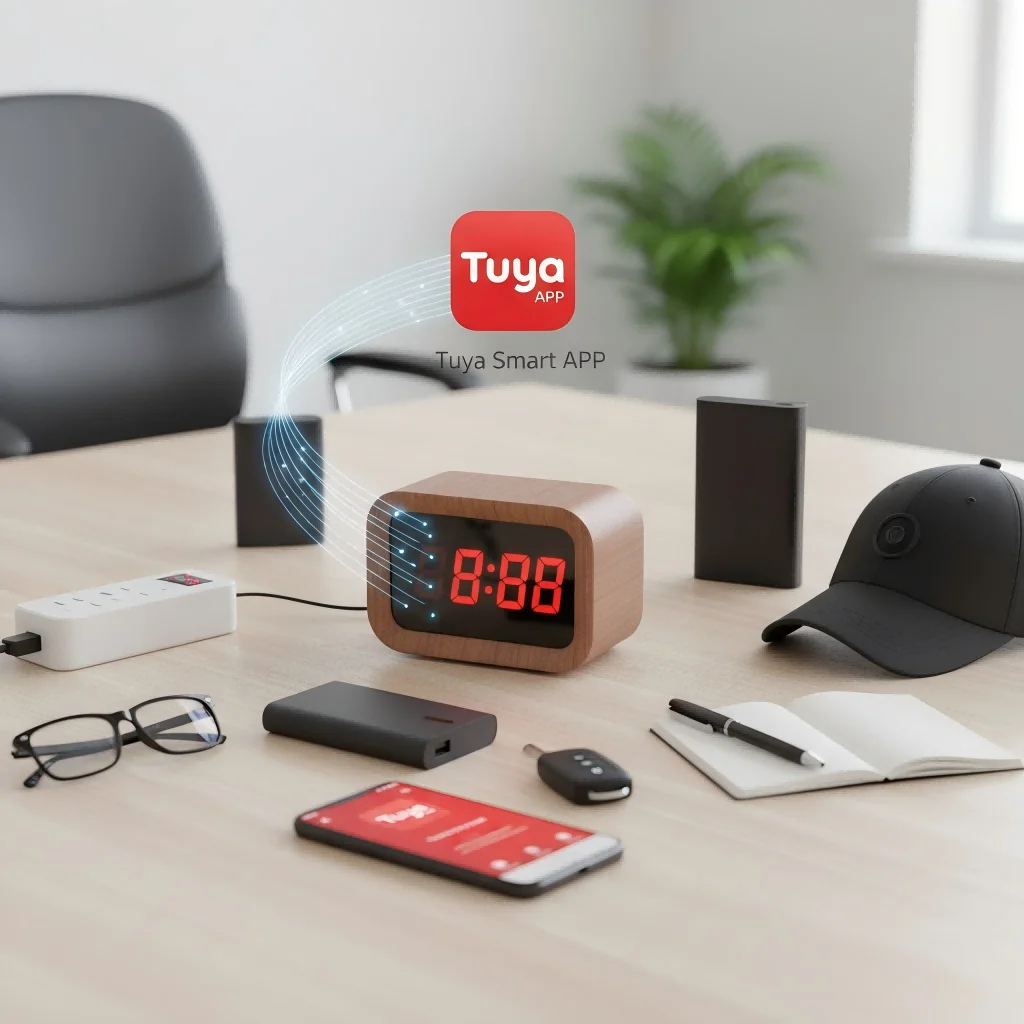
App stability — this is where most buyers get burned. ICSEE, V380, Yi IOTC, and similar generic apps used by dozens of manufacturers have a documented history of server shutdowns, app redesigns that break compatibility, and region-specific server routing. Before purchasing, search “[brand name] app shutdown” or “[brand name] no longer working.” Reputable manufacturers with their own proprietary app ecosystem are worth paying a premium for.
| Especificación | Mínimo aceptable | Ideal | Red Flag |
|---|---|---|---|
| Resolución | 1080p / 2MP | 2K / 5MP | 720p or below |
| Night vision | 850nm, 4+ LEDs | 940nm, 6+ LEDs | No IR LEDs listed |
| Wi-Fi | 2,4 GHz | Dual-band 2.4/5GHz | WiFi not supported |
| Almacenamiento | 32GB SD card | 128GB SD + cloud backup | Cloud-only |
| App ecosystem | Named app with updates | Proprietary branded app | Generic ICSEE/V380 |
Which Spy Camera Form Factor Is Right for Your Space?
Form factor determines placement, not image quality. The same sensor performs identically whether inside a clock or a smoke detector — what changes is how discreetly the camera can be positioned.
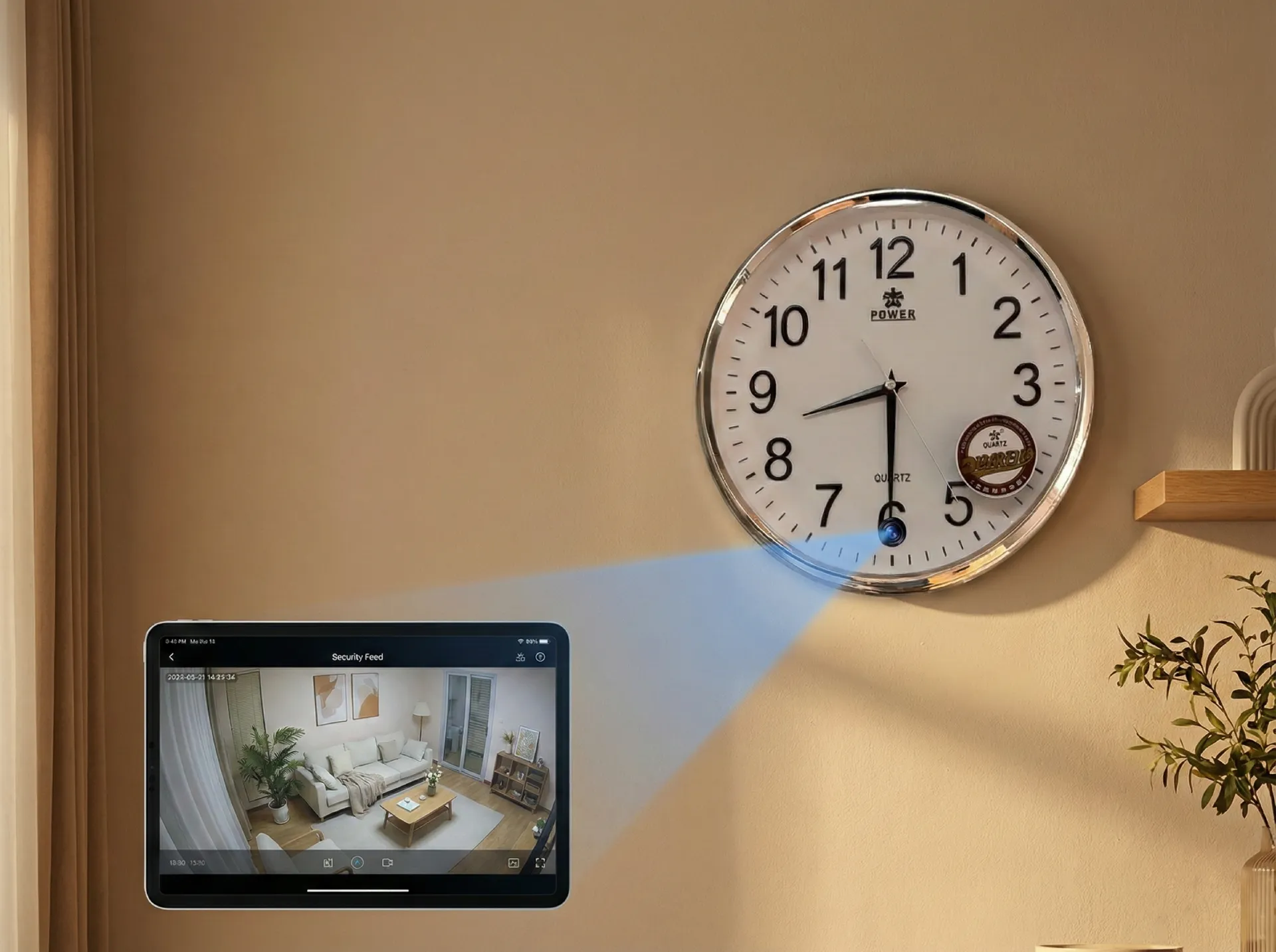
Clock cameras (e.g., QZT Z10) are the highest-selling residential form factor across Europe. Place them on a shelf or wall at eye level — ideal for living rooms, home offices, and bedrooms where a functional clock is expected. Image quality is excellent because the larger housing accommodates a quality lens and powerful IR LEDs. Avoid in spaces where a clock would look out of place (kitchens, bathrooms, hallways).
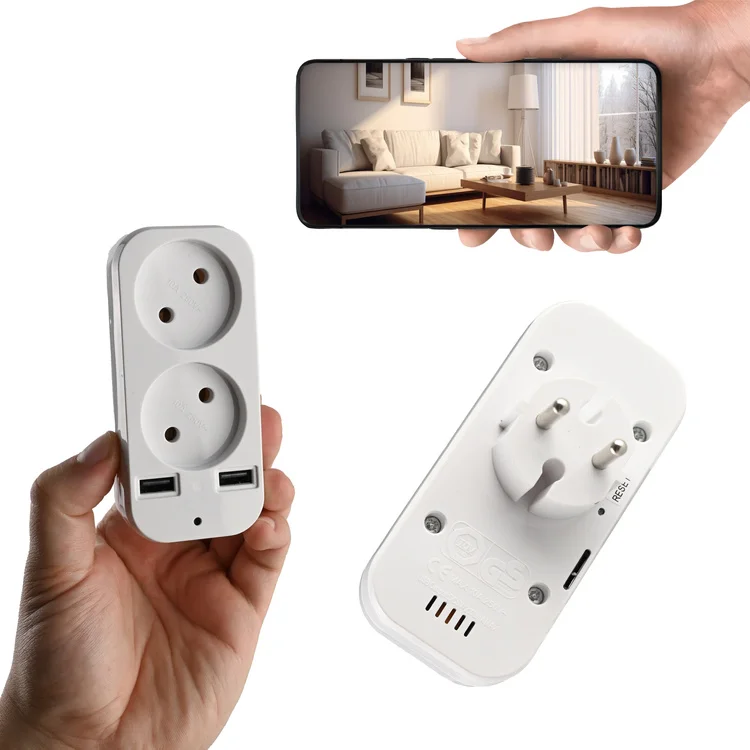
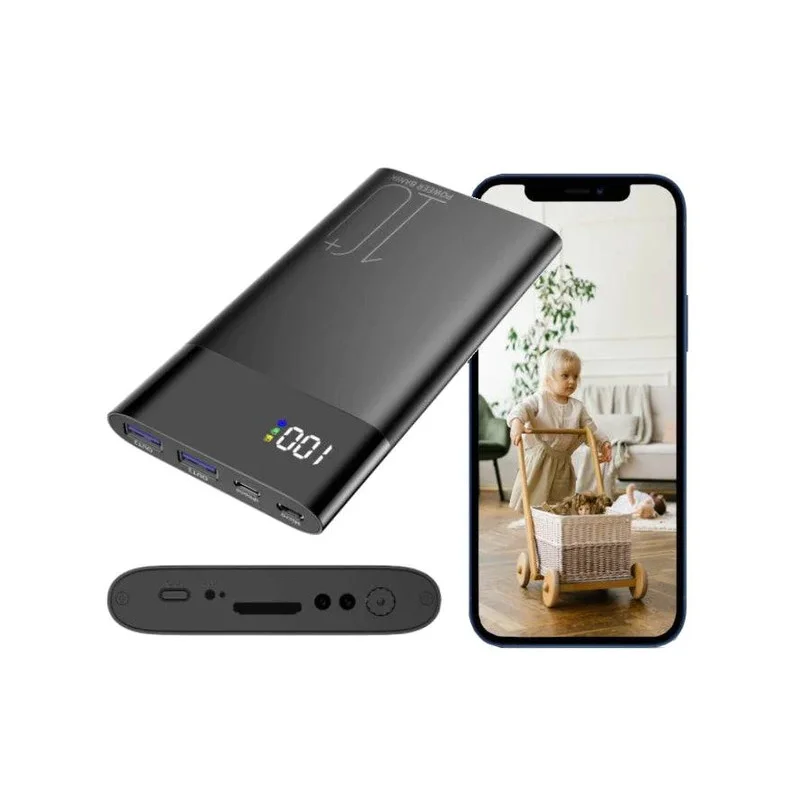
USB charger / power strip cameras work in any room with a socket. The camera is always powered, never runs out of battery, and the USB port remains functional for charging devices. Best for rental properties where drilling is prohibited. The trade-off is a fixed viewing angle — most charger cameras point straight ahead at roughly 90°.
Smoke detector cameras require ceiling mounting but offer the best overhead room coverage. Most models look convincing because they are based on real detector housings. Ideal for living rooms and large open spaces. Installation requires a drill and stable mounting surface — not suitable for renters.
Pen cameras are personal carry devices, not room surveillance. The QZT W8 series records to internal storage or WiFi streaming. Battery life is 60–90 minutes of continuous recording, making pen cameras best suited for meeting documentation and personal safety rather than home security.
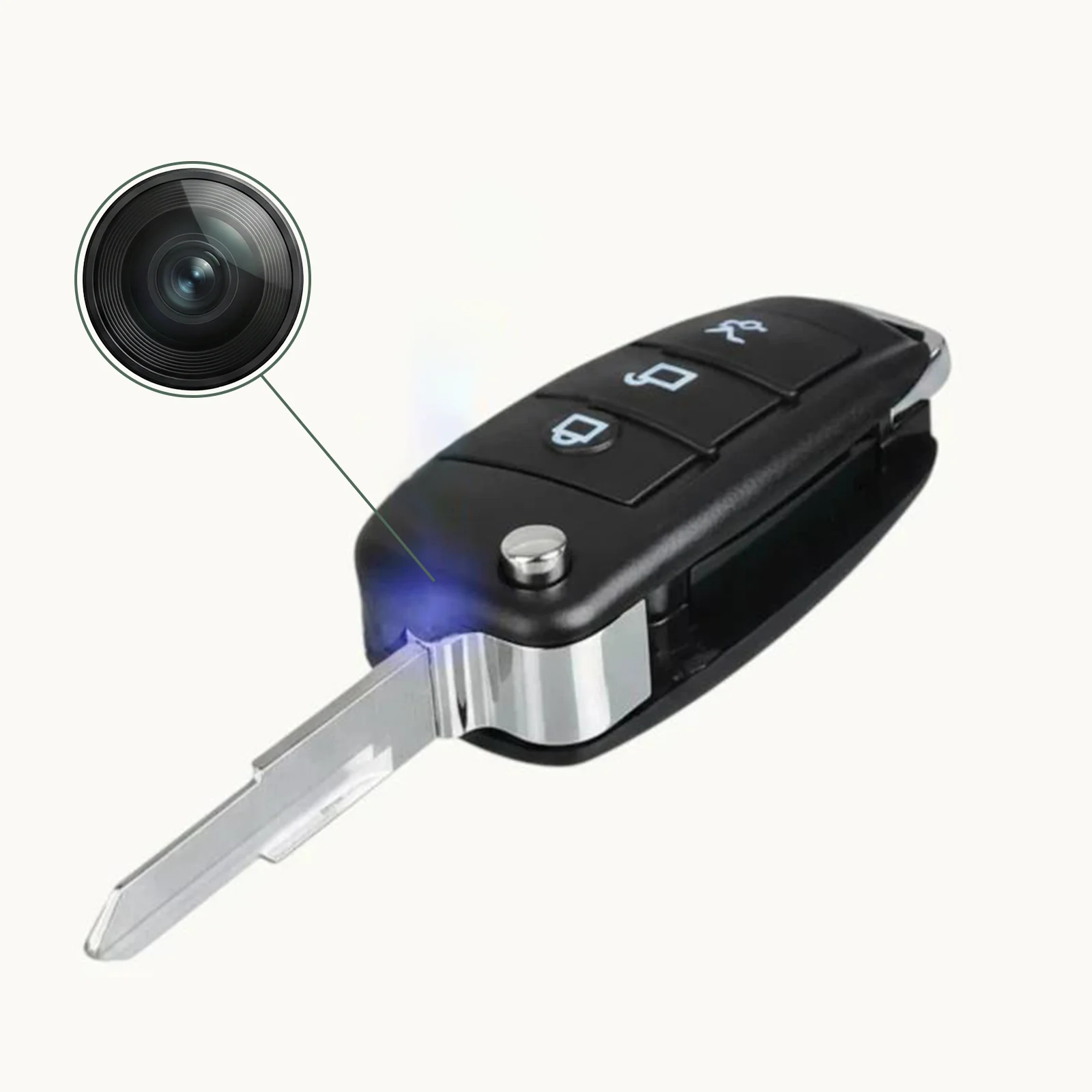
Car key fob cameras like the QZT G3000 are genuinely covert — nobody questions a car key on a desk or table. 1080p with loop recording and motion detection. Battery is 90 minutes. Best for single-room personal use where the subject is within 2 meters.
| Factor de forma | Fuente de energía | Best Room | Instalación | Battery Backup |
|---|---|---|---|---|
| Cámara reloj | Mains powered | Living room, bedroom | Shelf/table placement | No |
| USB charger | Mains powered | Any room with socket | Plug into wall outlet | No |
| Detector de humo | Mains powered (hardwire) | Living room, hallway | Montaje en techo | No |
| Pen camera | Internal battery (90 min) | Office, meeting room | Portátil | Sí |
| Car key fob | Internal battery (90 min) | Small room, personal | Table/desk placement | Sí |
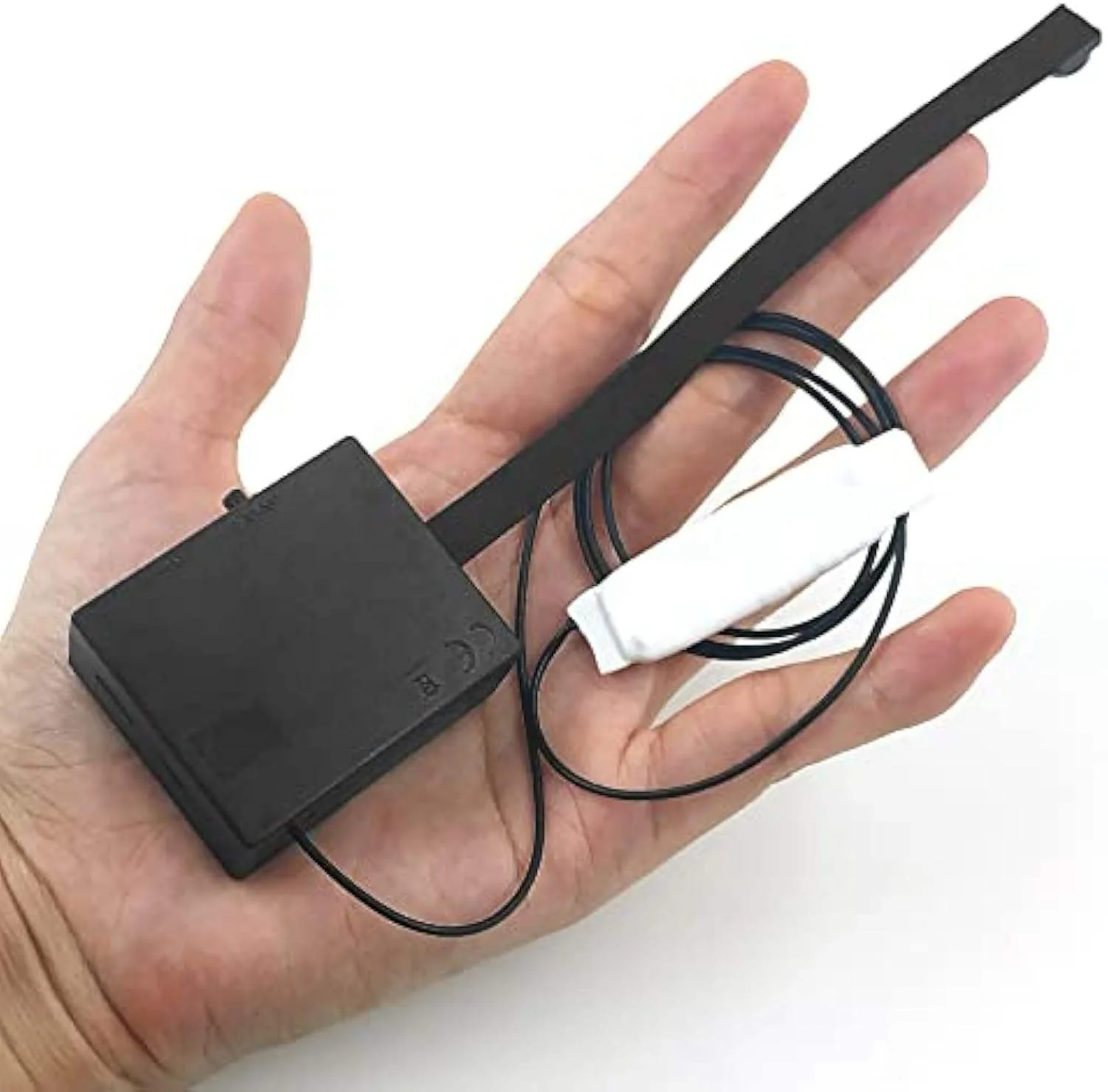
| Mini module (DIY) | External 5V | Custom enclosure | Varía | Varía |
How Do You Buy a Spy Camera as a Business Buyer?
B2B procurement introduces requirements that consumer buyers do not face: CE certification, GDPR compliance documentation, supply chain continuity, and volume pricing.
CE certification is non-negotiable for EU distribution. Every camera imported into or sold within the EU must carry a CE mark declaring conformity with EMC (2014/30/EU), RoHS (2011/65/EU), and Radio Equipment (RED 2014/53/EU) directives if the device transmits radio signals. Cameras without CE marking can be seized by customs and expose the buyer to product liability claims.
GDPR compliance documentation should be part of the purchase specification. Under GDPR, businesses deploying surveillance cameras must document: the lawful basis for processing (typically Article 6(1)(f) legitimate interest), the data retention period, and subject access procedures. Distributors selling to EU businesses should provide a Data Processing Impact Assessment (DPIA) template — QZT Security includes this as standard with B2B orders.
Supply chain continuity matters more than the initial unit price. The camera app problem (mentioned above) becomes a business continuity risk when you have 50+ installations. A manufacturer that abandons their app leaves you with hardware that continues to function but provides no remote access. Ask prospective suppliers: How long has the current app been supported? What is the hardware lifecycle commitment?
Volume pricing typically starts at 10 units. Most manufacturers offer tiered pricing: consumer unit price at 1–9 units, distributor pricing at 10–49 units, and OEM pricing at 50+ units. For genuine OEM partnerships (custom firmware, branding, packaging), minimum orders usually start at 100–500 units depending on customization depth.
What Is the Real Price Range for a Quality Spy Camera in 2026?
The market breaks into four tiers with distinct value propositions. Understanding where each tier fits prevents overpaying or underbuying.
$15–25 — Entry level / bulk OEM captures first-time buyers who have not yet learned what fails. Hardware quality is inconsistent; app servers are frequently shut down within 12–18 months; night vision LEDs are low-power 850nm units with limited range. These cameras are only appropriate for buyers treating them as disposable (one-time events, short-term monitoring).
$30–60 — Mid-range consumer is where most buyers should focus. This tier delivers genuine 1080p from Sony or equivalent sensors, functional night vision, 2.4GHz WiFi with named apps, and SD card storage. Brands operating at this level include QZT Security and several Shenzhen-based manufacturers with established export channels. Return rates are substantially lower than entry-level units.
$70–120 — Premium consumer / entry professional adds features like 2K resolution, dual-band WiFi, improved low-light sensors (Sony IMX307 BSI), and more stable app ecosystems. This is the ceiling for residential and small business deployments. Beyond this price, you are paying for brand premium and retail margins rather than hardware improvements.
$150–500+ — Professional surveillance covers purpose-built systems with NVR compatibility, ONVIF protocol support, true wide dynamic range sensors, and industrial-grade build quality. This tier is not spy cameras in the traditional sense — these are professional CCTV components repackaged for covert use. Appropriate for institutional buyers (care homes, retail chains, logistics companies) requiring audit-grade footage.
How Do You Set Up a New Spy Camera Once You Have It?
Most quality cameras follow the same setup sequence — deviations usually indicate a poorly documented product.
Step 1 — Insert the SD card before powering on. Some cameras initialize the SD card filesystem on first boot; inserting it afterward causes recognition failures.
Step 2 — Download the correct app before connecting. Search the app store for the manufacturer’s named app — not “ICSEE” generically, which pulls up dozens of unrelated apps. Scan the QR code on the device or in the manual.
Step 3 — Connect your phone to the camera’s local WiFi hotspot. Most cameras create an AP hotspot on first boot (SSID like “CAM_XXXX”). Connect to it, then open the app — the app detects the camera automatically.
Step 4 — Configure your home WiFi network. The app prompts you to enter your router’s 2.4GHz SSID and password. The camera reboots and connects to your network. You now have remote access from anywhere.
Step 5 — Set recording preferences. Configure loop recording (oldest footage overwritten when SD is full), motion detection zones (draw areas of the frame to monitor), and recording schedule (all-day vs. motion-only).
Preguntas frecuentes
What is the best spy camera for home security under $100?
The $45–80 range delivers the best value. At this price, expect genuine 1080p from a Sony IMX307 or equivalent sensor, functional 940nm night vision, and a named app with regular updates. QZT’s clock camera and USB charger camera lines both land in this range and represent the practical ceiling for residential single-camera deployments.
How do I know if a spy camera app is reliable before buying?
Search “[app name] + shutdown” or “[app name] + discontinued” before purchasing. Reputable brands (QZT included) maintain their own apps with version histories visible in app stores. Generic apps like ICSEE, V380, and Yi IOTC serve dozens of manufacturers — when one manufacturer stops paying the app server fees, the app may continue but camera support disappears without warning.
Is 1080p enough to identify a person’s face on camera?
At 2 meters distance in good lighting, 1080p captures a face large enough for identification in most cases. Beyond 3–4 meters or in low-contrast lighting (backlit subjects, shadows), 2K or higher resolution makes a meaningful difference. For evidence-quality footage in legal proceedings, 2K is the minimum recommended resolution.
Can I use a spy camera in my Airbnb rental legally?
In the UK, landlords must disclose cameras to guests under the Data Protection Act 2018 — failure to do so is a data breach. In Germany, covert recording of guests is illegal regardless of disclosure. In France and Italy, explicit guest consent is required in writing. Check your local short-term letting regulations before installing any camera — the penalties for non-disclosure can exceed £5,000 in the UK.
Should I buy a spy camera with cloud storage or local SD storage?
Local SD storage is the safer default for privacy and cost control. Cloud storage requires trusting a third party with your footage, involves monthly fees, and becomes inaccessible if the company shuts down. Some cameras offer both — this is the best configuration, using local SD as primary and cloud as optional backup for critical deployments.
Ready to purchase with confidence?
QZT Security supplies CE-certified covert cameras with GDPR documentation packages for EU and UK buyers. Request a wholesale inquiry for volume pricing and custom branding options.

 English
  Italiano
  Deutsch
  Français
  Español
  Polski