
You are in a hotel room. It is late. The hallway lights have gone quiet. You think you hear something — a faint mechanical click, somewhere near the ceiling. Three seconds. Silence. Then another click. Was that the smoke detector?
This question — do hidden cameras make noise — has a more complicated answer than most articles admit. The short version: yes, most hidden cameras produce operational sounds. The longer version: those sounds are usually so quiet that human ears miss them, and in any case, they are not the most reliable way to detect a covert camera.
This guide is written for UK and EU security equipment distributors, installers, and B2B buyers who need to understand what hidden cameras actually sound like — both to advise their own customers and to evaluate whether the operational sound profile of a product matters for a specific deployment. We will cover the physics of camera sounds, what components produce them, the legal framework in the UK and EU, and practical detection methods for businesses and individuals.
La Respuesta Directa Primero
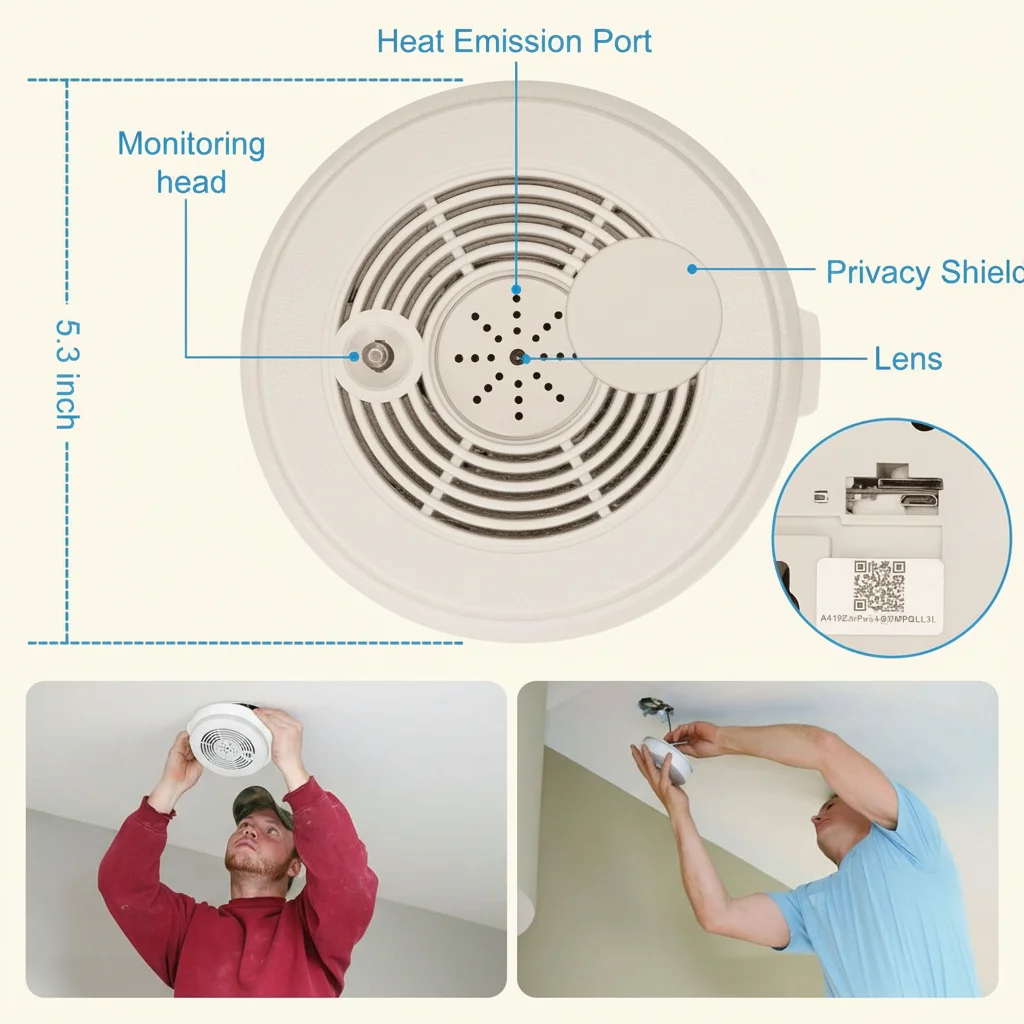
Most hidden cameras do make noise. The question is whether humans can hear it.
Modern board-level camera modules are remarkably quiet. The camera sensor itself produces no sound at all — it is a solid-state electronic component. The sounds come from the supporting hardware around it: the motor that switches the infrared cut filter, the tiny stepper motor that rotates a PTZ lens, the vibration of a microSD card being written to, the transformer in a hardwired power supply, or the PIR motion sensor triggering.
Most of these sounds fall between 1kHz and 20kHz — a range that overlaps with human hearing but is often quiet enough (below 20–25 dB) to be masked by ambient room noise. A quality smoke detector hidden camera in a sealed ceiling unit, running from 230V hardwired power, is for practical purposes silent. A battery-powered pen camera in a quiet room is more likely to produce an audible click when the IR filter engages at dusk.
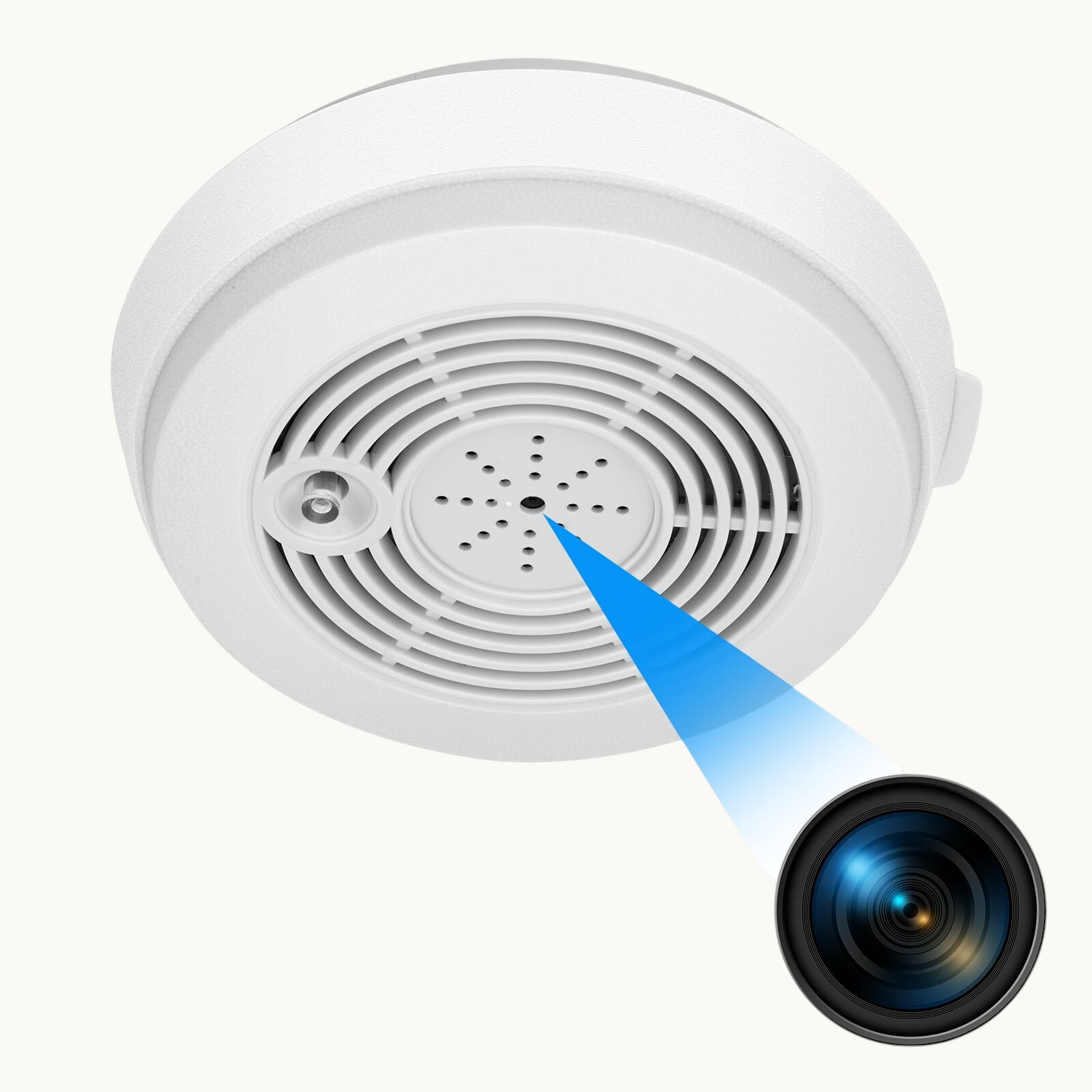
Why Hidden Cameras Make Noise: The Technical Breakdown
Understanding which component produces which sound helps you evaluate products and advise customers accurately.
The IR Cut Filter: The Loudest Component
This is the most common source of audible noise in any hidden camera that has night vision capability.
An IR cut filter is a small piece of glass or coated film positioned in front of the image sensor. During daylight, it blocks infrared light so that colours in the image remain accurate. At night, when the camera switches to infrared illumination for night vision, a tiny electromagnetic motor slides the filter out of the optical path. This motor — a miniature stepper or solenoid — produces a distinctive click.
The sound is brief (50–200 milliseconds) and characterised by a sharp mechanical snap. It is the most recognisable operational sound that a hidden camera makes, and it occurs twice per day: once when the camera switches to night mode (typically at dusk, controlled by ambient light threshold) and once when it switches back (typically at dawn).
What this means for deployment: If you are selling to a customer deploying a camera in a quiet bedroom or nursery, the IR cut filter click at dusk could be noticeable. Higher-end cameras use voice coil actuators rather than stepper motors and produce quieter transitions. Budget cameras with cheaper actuators are louder. A product with no IR capability — day-only cameras — produces no IR filter sound at all.
PTZ Motor Rotation
Pan-tilt-zoom cameras contain stepper motors that physically move the lens assembly. Every pan, tilt, or zoom action is accompanied by a mechanical whirring sound — typically 30–40 dB at 1 metre. This is clearly audible in a quiet room.
Most covert camera form factors (smoke detectors, clock cameras, USB chargers) are fixed-lens cameras and do not contain PTZ motors. However, some WiFi spy cameras with rotating lenses — including certain clock camera variants — do incorporate a limited rotation motor. These are louder than IR filter clicks.
What this means for deployment: PTZ covert cameras are a niche product. Most B2B deployments (retail loss prevention, home security) use fixed-lens units. If your customer insists on PTZ capability in a discreet form factor, advise them that the motor sound limits the product’s suitability for covert deployment in occupied residential spaces.
microSD Card Write Clicks
When a camera saves a clip to local storage, the SD card controller performs a write operation that produces a faint click — typically 15–25 dB at 5cm. This is barely perceptible even in complete silence and is further muffled if the camera is housed inside a plastic or metal shell.
Continuous recording generates multiple writes per second; motion-triggered recording generates intermittent clicks when events are saved. Some cameras use a buffered write that produces a series of micro-clicks during the save operation.
What this means for deployment: SD card write sounds are not a meaningful detection risk for most deployments. They are too quiet and too irregular to reliably identify. However, for forensic investigators looking for a silent space to work in, a camera set to motion-triggered recording in an otherwise quiet room could produce faint clicks at unpredictable intervals.
Power Supply Transformer Hum
Hardwired hidden cameras (230V AC, like a smoke detector camera or a hardwired wall-clock unit) contain a small internal step-down transformer to convert mains voltage to the 5V DC that the camera board requires. This transformer vibrates at twice the mains frequency — 100Hz in the UK/EU (50Hz mains × 2, due to magnetic flux alternation).
This vibration produces a low-frequency hum at 100Hz (and harmonics at 200Hz, 300Hz). At normal operating distance (1–3 metres), this hum is typically below 20 dB — far below the human hearing threshold in a room with any ambient noise. It is essentially inaudible in any normal living or working environment.
What this means for deployment: Transformer hum from hardwired cameras is a non-issue for most deployments. It only becomes potentially detectable in an acoustically treated room, a recording studio, or a vault — environments where the ambient noise floor is below 20 dB.
PIR Motion Sensor Activation
Many hidden cameras include a passive infrared (PIR) sensor to detect body heat and trigger recording. PIR sensors contain a small infrared-sensitive element that expands and contracts as it absorbs IR radiation. This mechanical movement produces a faint click — typically the quietest and most irregular of all camera sounds.
PIR clicks occur only when the sensor activates, which means they are tied to movement in the camera’s field of view. In a room with frequent movement, a PIR camera may click multiple times per minute.
What this means for deployment: PIR clicks are faint and irregular enough that they are unlikely to give away a camera’s presence in any normal environment. They become a consideration only in very quiet spaces where someone is specifically listening for anomalies.
WiFi and Bluetooth Module Electronic Sounds
Modern hidden cameras contain wireless modules (typically 2.4GHz WiFi, sometimes Bluetooth). These modules occasionally produce brief electronic sounds:
– Connection chirp: Some WiFi modules emit a short burst of electronic noise when establishing or re-establishing a connection. This is usually below 10–15 dB and lasts less than a second.
– Power state changes: When a camera wakes from sleep mode or initiates a streaming session, the wireless module draws current in pulses that can produce a barely perceptible whine at 15–20kHz — at the very edge of human hearing.
These sounds are not consistent or predictable enough to serve as reliable detection indicators.
Night Vision LED Arrays
Some hidden cameras use an array of infrared LEDs for night vision illumination. These LEDs are solid-state components and produce no sound whatsoever. However, the LED driver circuit — which modulates current to control LED brightness — can produce a faint high-frequency whine. This is most audible in high-powered arrays (12+ IR LEDs) and is typically at 15–20kHz, at or above the upper limit of most adult hearing.
Operational Sound Comparison by Camera Type
Here is a practical comparison of operational sound levels across common hidden camera form factors. These are approximate values measured at 1 metre in a quiet room (ambient noise floor ~25 dB).
| Tipo de cámara | IR Filter Click | Motor/PTZ | SD Click | Transformer Hum | Overall Audible? |
|---|---|---|---|---|---|
| Smoke detector (hardwired) | Faint click (~25 dB) | None (fixed) | Barely audible at 1m | Apenas audible | Rara vez |
| Cámara de reloj (con cable) | Faint click (~25 dB) | Posible (lente giratoria) | Apenas audible | Posible zumbido bajo | A veces |
| enchufe espía con cámara (enchufado) | Faint click (~25 dB) | None (fixed) | Clic débil | Posible | A veces |
| Cámara de bolígrafo (batería) | Clic (~25–30 dB) | None (fixed) | Clic débil | Ninguno | Sí, al anochecer |
| WiFi power bank camera | Clic (~25 dB) | None (fixed) | Clic débil | Ninguno | Posible por la noche |
| Cámara altavoz de reloj PTZ | Clic + zumbido | Audible (~35 dB) | Clic débil | Posible | Normalmente sí |
Conclusión clave: la presencia de un motor PTZ o el funcionamiento con batería por la noche son las dos condiciones que más probablemente produzcan un sonido audible de cámara en una habitación silenciosa.
Marco legal del Reino Unido y la UE: lo que el ruido te dice
Comprender el contexto legal importa por dos razones: primero, la grabación de audio encubierta por otros puede ser ilegal en su jurisdicción; segundo, si usted vende o despliega cámaras, los sonidos que produce su producto pueden afectar su uso legal.
RIPA 2000 y el Reino Unido: Leyes de grabación de audio
La Ley de Regulación de Poderes de Investigación de 2000 (RIPA 2000) es la legislación principal que rige la interceptación de comunicaciones en el Reino Unido. Para cámaras ocultas con capacidad de grabación de audio, aquí es donde se concentra el riesgo legal.
– Grabar una conversación en la que eres parte: Generalmente legal en el Reino Unido
– Grabar conversaciones entre otros sin su conocimiento: Potencialmente ilegal según la RIPA 2000 y la ley común de violación de confidencialidad
– El clic de un filtro IR que se activa: Esto por sí solo no constituye interceptación ilegal según la RIPA — es un sonido mecánico operativo, no una comunicación
Si tu cliente te dice que necesita grabar audio de forma encubierta en un lugar de trabajo del Reino Unido, la respuesta es clara: casi con toda seguridad no puede hacerlo legalmente sin autoridad legal explícita (en la mayoría de los casos, esto significa una autorización RIPA de una autoridad local o un poder estatutario específico).
GDPR del Reino Unido y DPA 2018: Obligaciones del Responsable de Datos
Cualquier cámara que capture imágenes de personas identificables convierte al instalador en un responsable del tratamiento bajo el RGPD del Reino Unido. Los sonidos que emite una cámara —su firma operativa— no alteran las obligaciones de protección de datos. Sin embargo, si una cámara oculta se coloca en un lugar donde las personas tienen una expectativa razonable de privacidad (dormitorio, baño, vestuario), la instalación probablemente sea ilegal tanto bajo la Ley de Delitos de Voyeurismo de 2019 como bajo la DPA de 2018, independientemente del ruido que haga la cámara.
El contexto de la UE: RGPD, implementaciones nacionales y audio
El mismo principio se aplica en todos los estados miembros de la UE. Alemania, Francia, Italia y España tienen disposiciones nacionales adicionales que regulan la grabación de audio encubierta:
– Alemania (BDSG §201 Strafgesetzbuch): Capturar palabras habladas privadas sin consentimiento es un delito penal. El clic del filtro IR de una cámara oculta no es el problema — lo es la función de grabación de audio. Deshabilite la capacidad de grabación de audio en despliegues donde no se pueda obtener consentimiento.
– France (CNIL): La vigilancia auditiva sistemática requiere una EIPD documentada y una declaración a la CNIL para instalaciones más grandes. Los sonidos mecánicos de una cámara en una instalación comercial francesa no están específicamente regulados, pero la presencia de la función de audio requiere divulgación.
– Italia (Garante + Estatuto de los Trabajadores Art.4): La vigilancia de audio por parte del empleador sin acuerdo del comité de empresa o del sindicato está prohibida. Una cámara detectora de humo con audio en un lugar de trabajo italiano requiere autorización explícita.
El consejo práctico para los distribuidores: especificar la capacidad de audio como una función opcional y documentar si está habilitada o deshabilitada en el punto de venta. Esto proporciona a tu cliente una posición defendible.
Cómo detectar una cámara oculta por sonido
Para empresas e individuos que necesitan inspeccionar un espacio, aquí están los métodos prácticos — clasificados por fiabilidad.
Método 1: La Prueba del Silencio Nocturno
El método de detección más económico disponible. Cuando el ruido ambiental es mínimo — típicamente entre la medianoche y las 5 a.m. en un entorno residencial o hotelero — muévase lenta y silenciosamente por el espacio.
Qué escuchar:
– Un clic mecánico agudo desde una posición fija (techo, pared, estante)
– Un clic repetido a intervalos de aproximadamente 12 horas (amanecer y anochecer) — el ciclo del filtro IR
– Cualquier chirrido o zumbido electrónico de un dispositivo específico que no sea un electrodoméstico conocido (altavoz, rejilla de HVAC)
Este método no es fiable en habitaciones con ruido ambiental normal y no puede distinguir los clics de la cámara de otros sonidos mecánicos (amortiguadores de HVAC, ciclos del compresor del refrigerador, movimientos de reloj).
Método 2: Detección de interferencia electromagnética
Las cámaras ocultas que transmiten datos — cámaras de transmisión WiFi, cámaras Bluetooth — generan campos electromagnéticos que pueden detectarse usando una técnica simple:
1. Make a phone call on a mobile phone
2. Walk slowly through the room
3. Listen for interference sounds on the call: crackling, clicking, buzzing, or static
4. As you approach the camera’s position, the interference should intensify
This method works because active wireless transmission produces electromagnetic interference in the phone’s radio. It does not detect cameras that are recording only to local storage (SD card only) and not transmitting.
Method 3: RF Detector Sweep
A dedicated RF detector (available from electronics suppliers for £20–80) detects radio frequency emissions in the 1MHz–6GHz range. Most WiFi hidden cameras transmit on 2.4GHz when they stream or upload footage.
To use an RF detector:
1. Silence all known wireless devices (phones, laptops, speakers)
2. Set the detector to its most sensitive mode
3. Sweep slowly around the room, paying particular attention to ceiling-mounted devices (smoke detectors), wall clocks, and electronic devices
4. Watch for signal spikes — a sustained or intermittent spike near a specific object is a strong indicator of active transmission
Limitación: RF detectors cannot detect cameras in pure local recording mode with no active transmission. They also cannot locate the camera precisely — they indicate only that a transmission is occurring nearby.
Method 4: Thermal Imaging (Professional)
For commercial security sweeps or high-stakes privacy protection, thermal imaging cameras can detect the heat signature of active electronics. A hidden camera that has been running for even a few minutes will produce a localised warm spot — distinct from passive objects in the room.
This method requires equipment that costs £200+ and requires some training to interpret correctly. It is the most reliable non-destructive detection method for both transmitting and non-transmitting cameras.
What Your Customers Will Ask: Real-World Scenarios
“I heard a click from my smoke detector at night. Is it a camera?”
A single click from a smoke detector at night is most likely the IR cut filter engaging — the camera switching from day mode to night vision. This is a characteristic sound: a brief, sharp mechanical snap. It is more common in battery-powered smoke detector cameras where the power supply is less smooth. A hardwired unit is less likely to produce an audible click.
To check: wait until the next dusk/dawn transition and listen deliberately. If the click recurs at the same time each day, it is almost certainly the IR filter. Then use a physical inspection (look for a pinhole lens opening) or an RF detector sweep to confirm.
“Is my Airbnb host listening to me?”
If you have heard audible sounds that suggest a recording device — repeated clicking, intermittent electronic sounds, or WiFi/Bluetooth interference — you have grounds to raise the issue with the host and, if warranted, with the police. In the UK, covert audio recording in a private residence without the consent of all parties is potentially a criminal matter under RIPA 2000 and the Protection from Eviction Act 1977. Document what you heard, where, and when.
If the concern is video only — you heard no sounds — the legal position is less clear and depends on the specific location within the property.
“A customer says our smoke detector camera is too loud”
If an end customer reports that they can hear their smoke detector camera operating, the likely cause is the IR filter click at night. Solutions:
– Replace with a day-only camera (no night vision, no IR filter, no moving parts)
– Choose a higher-quality camera with a voice coil IR filter actuator rather than a stepper motor
– Reposition the camera to a less sensitive room
– Set a fixed night vision schedule so the click occurs at a predictable time rather than at ambient light threshold (which can vary)
The Honest Bottom Line for Distributors and Installers
Here is what you should tell your customers:
Most hidden cameras are effectively silent in normal use. The sounds they produce are so quiet — 15–30 dB at source — that they are masked by ordinary ambient noise in any occupied space. A camera in a living room, office, or retail floor will not betray its presence through sound alone.
The exceptions are specific and predictable: PTZ rotation, IR filter engagement at dusk/dawn in battery-powered units, and active wireless transmission. If your customer is deploying in an environment where absolute silence is critical — a recording studio, a nursery at night, a high-security government facility — these exceptions matter.
The real detection risk is not sound — it is electromagnetic signature and network visibility. A WiFi camera that streams to the cloud is detectable on any network scan. A camera with audio recording capability that captures private conversations without consent is a legal liability regardless of whether it makes a sound.
The best approach is prevention through product selection. Choose cameras without audio recording if consent cannot be obtained. Choose fixed-lens units without PTZ if motor noise is a concern. Choose local SD recording over cloud streaming if network visibility is a concern. Document the configuration at point of installation.
If you are evaluating hidden cameras for commercial deployment — retail loss prevention, home security, elderly care monitoring, or hospitality management — QZT Security supplies a range of hidden camera form factors with full technical documentation, CE compliance certification, and EU shipping from our Italian warehouse. Contáctenos hoy para analizar sus requisitos o solicitar una unidad de muestra para evaluación.

 English
  Italiano
  Deutsch
  Français
  Español
  Polski